

In a 6–3 decision, the U.S. Supreme Court ruled that former President Trump exceeded his authority by imposing global tariffs under emergency powers. Here’s what it means for the automotive industry.
The U.S. Supreme Court delivered a significant legal blow to former President Donald Trump’s trade strategy, ruling 6–3 that the administration overstepped its constitutional authority by using emergency powers to impose broad, open-ended tariffs.
At the heart of the decision was the 1977 International Emergency Economic Powers Act (IEEPA), which the Trump administration argued granted the president authority to regulate imports during a declared national emergency. The Court disagreed.
Chief Justice John Roberts, writing for the majority, reaffirmed that the power to impose tariffs lies exclusively with Congress under the Constitution.
The Constitutional Argument
The Court emphasized that the authority to “lay and collect taxes,” including tariffs, is explicitly reserved for Congress.
“The Framers recognized the unique importance of this taxing power,” the ruling stated, underscoring that tariff authority cannot be transferred through vague statutory language.
The administration had argued that terms such as “regulate” and “importation” within IEEPA provided sufficient grounds for expansive tariff authority once a national emergency was declared.
The Court rejected that interpretation, warning that such a reading would represent a “transformative expansion” of presidential power over trade policy.
In short: emergency powers cannot replace Congress when it comes to taxation and tariffs.
What Tariffs Were at Issue?
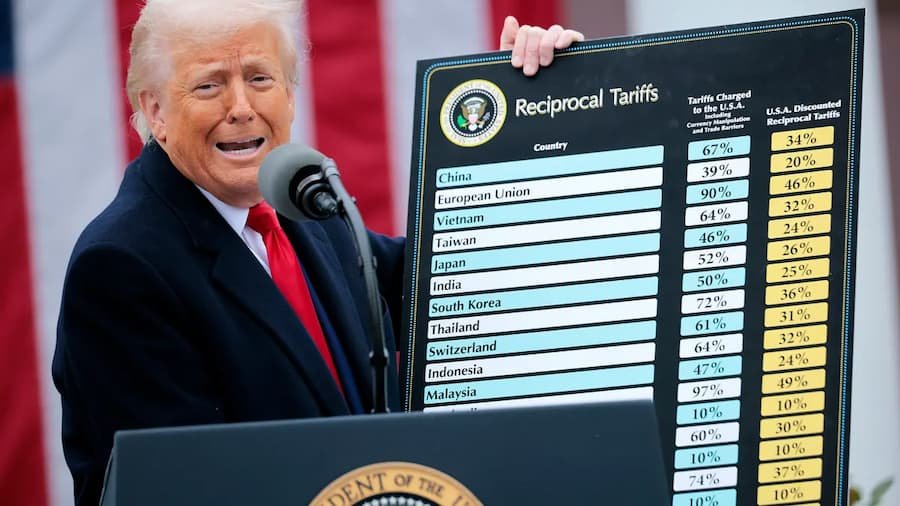
The case centered around so-called “reciprocal tariffs” and broad duties imposed on multiple countries, including China, Canada, and Mexico.
The administration justified these measures by citing:
- Trade deficits
- National security concerns
- Fentanyl trafficking
However, the Court ruled that these concerns did not grant the president unilateral tariff authority.
Importantly, the decision does not automatically invalidate tariffs implemented under other statutory mechanisms.
What About Section 232 Tariffs?
The ruling does not affect tariffs imposed under Section 232 of the Trade Expansion Act of 1962.
Those include sector-specific duties on:
- Steel
- Automobiles
- Furniture
Section 232 has historically been used to justify tariffs based on national security grounds, and the Court did not address those measures in this case.
This distinction is critical for the automotive sector.
Impact on the Automotive Industry
For automakers, tariff policy directly affects:
- Production costs
- Supply chain planning
- Cross-border sourcing
- Raw material pricing
During the Trump administration, steel tariffs and import duties increased input costs for manufacturers operating in the U.S.
The Supreme Court’s decision limits the executive branch’s ability to impose sudden, sweeping trade measures under emergency authority.
In theory, this could lead to a more predictable tariff environment a key concern for global OEMs and suppliers.
However, trade policy remains subject to political direction through Congress and other statutory tools.
Broader Trade Implications
The Court’s ruling reinforces the separation of powers in U.S. trade policy.
Congress retains the “power of the purse,” and any delegation of tariff-setting authority must be explicit and narrowly defined.
This may slow down aggressive tariff implementation in the future, as legislative processes are typically more complex than executive actions.
For global manufacturers, predictability is often more valuable than leniency. A clearly defined tariff framework reduces risk premiums and long-term planning uncertainty.
International Supply Chain Effects
The decision could ease some of the legal uncertainty surrounding U.S. trade negotiations.
During the appeal process, the administration argued that unresolved legal questions were harming trade discussions.
With the Supreme Court’s ruling now final, multinational firms can reassess exposure to potential emergency-based tariff risks.
Still, alternative tools remain available to U.S. policymakers, meaning protectionist measures are not off the table entirely.
Strategic Outlook
The ruling represents a recalibration rather than a dismantling of U.S. trade defenses.
Presidents still have authority under other laws, but broad emergency-based tariff programs without clear congressional backing now face a higher constitutional barrier.
For the automotive industry, this reduces the likelihood of abrupt, globally applied tariff shocks based solely on executive emergency declarations.
That said, political trade tensions particularly involving China are unlikely to disappear.
Editorial Perspective
This 6–3 decision is less about trade and more about constitutional structure.
The Court reaffirmed that taxation power sits with Congress not the presidency.
For automakers and suppliers, the key takeaway is stability. Executive-driven tariff volatility has been curbed, but sector-specific duties under established statutes remain intact.
Trade policy in the United States may now move more slowly but potentially with greater predictability.